 how-to
Why Choose Close-Up Magic for Corporate Events
Last Updated: October 23, 2026
Quick Summary
Why choose close up magic for corporate events is because it transforms stiff networking moments into genuine connection by working in any space without stage setup, creating surprise that breaks the ice, and encouraging guests to gather and mingle naturally around intimate, interactive tricks performed right at their tables.
- Close-up magic works in tight spaces without formal seating or stage setup, adapting to cocktail receptions, dinners, and team events
- One magician can comfortably work a room of roughly 20-150 guests over an evening depending on format and timing
- Interactive routines where guests participate in the trick create investment and make the reveal hit harder than passive observation
- Close-up magic encourages networking by getting guests standing, talking, and moving between tables instead of sitting passively
- A professional magician should hold public liability insurance, provide written quotes, offer multiple effects, and adapt to schedule changes
Table of Contents
- What Close-Up Magic Brings to Corporate Events
- How Close-Up Magic Works as a Corporate Event Icebreaker
- Guest Interaction and Networking Benefits
- Close-Up Magic vs Stage Magic: Which Suits Your Event
- Practical Applications: Cocktail Receptions, Dinners, and Team Events
- Hiring a Corporate Magician: What to Look For
- Frequently Asked Questions
What Close-Up Magic Brings to Corporate Events
Understanding why choose close up magic for corporate events starts with how it transforms them into memorable experiences. It works in tight spaces, needs no stage setup, and creates genuine surprise that breaks the ice.
Unlike stage magic, which demands distance and formal seating, close-up magic happens right at the table.
Close-up magic changes a room's energy: a stiff networking event becomes a conversation starter, a formal dinner becomes a story people tell their friends. The magic isn't the trick, it's the connection.
Corporate events often struggle with one problem: guests don't naturally mingle. Close-up magic gives everyone a reason to gather, watch, and react together, and that shared moment opens doors for genuine conversation.
How Close-Up Magic Works as a Corporate Event Icebreaker
Close-up magic breaks tension because it's unexpected and disarming. People arrive with their professional masks on; a skilled magician removes them through surprise.
The mechanics are simple: a magician moves through the room, stopping at tables or clusters for a 3-5 minute routine. Guests' brains engage trying to solve the puzzle, that engagement is what makes it an icebreaker.
When a trick lands, people laugh, lean in, and ask questions. A guest standing alone suddenly has a reason to join a table; the shared mystery creates common ground between strangers.
Different magic styles work for different moments:
- Card magic: Fast, visual, easy to understand. Works well for quick stops at tables during cocktail hour.
- Coin magic: Close, intimate, hands-on. Perfect for smaller groups or one-on-one interactions.
- Prediction magic: Builds tension over time. Great for creating a talking point that lasts all evening.
- Participatory magic: Guests make choices or predictions. They become part of the story, not just observers.
The key is variety: a good corporate magician rotates effects so the evening feels fresh and keeps people guessing.
Guest Interaction and Networking Benefits
Close-up magic actively encourages networking instead of replacing it. Stage magic keeps people seated and passive; close-up magic gets them standing, talking, and moving.
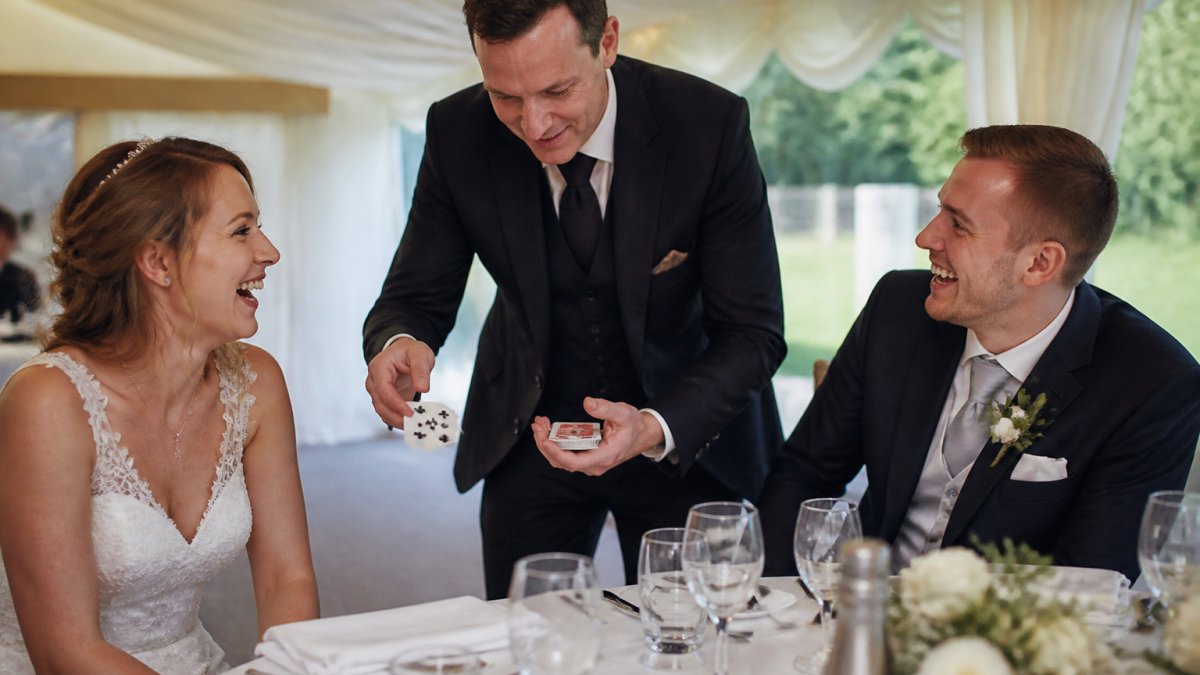
In practice, a magician performs at one table, guests nearby drift over, and a crowd forms.
After the magic ends, people stay clustered, speculating about how it was done. A shy employee becomes animated explaining their theory; a distant client becomes warm and engaged.

For hotel and restaurant events, close-up magic makes guests feel special without feeling watched, each table thinks they got the best performance.
The networking benefit extends beyond the event.
Close-Up Magic vs Stage Magic: Which Suits Your Event
Both styles have value but solve different problems.
Stage magic requires:
- A dedicated performance space or stage
- Audience seated in rows facing forward
- Formal, scheduled performance time
- Larger illusions and props
- Distance between performer and audience
Stage magic works when you want a show: everyone stops and watches, creating a polished "performance moment." But it stops networking, people sit, watch, then return to their conversations.
Close-up magic requires:
- Space for a magician to move freely
- Small clusters of people (4-8 per group)
- Flexible timing throughout the event
- Intimate tricks and card work
- Direct interaction with guests
Close-up magic works when you want connection. It happens during cocktail hour, dinner, or between formal segments, keeping the event flowing while encouraging people to move, gather, and talk.
Stage magic suits a specific performance slot and formal seating; close-up magic enhances your event without stopping it.
Practical Applications: Cocktail Receptions, Dinners, and Team Events
Close-up magic adapts to different event formats.
Step 1: Match the format to the moment.
- Cocktail receptions are ideal for close-up magic. Guests arrive, grab drinks, and stand in groups; a magician moving through the room gives them a reason to gather and stay engaged. Timing is flexible, 30 minutes or 3 hours, and guests encounter magic multiple times, creating repeated moments of surprise and conversation.
- Formal dinners present a different challenge: guests are seated and cannot move freely. Close-up magic still works because the magician comes to the table during the starter or between courses. The table becomes a private audience, breaking up the formality and giving people something to discuss.
- Team-building events benefit because close-up magic creates a shared experience without requiring participation. Unlike activities that force people out of their comfort zone, it lets people relax together, no one feels put on the spot unless they want to be.
- Christmas parties and seasonal celebrations often struggle with entertainment that feels fresh. Close-up magic is different from what people expect, adding sophistication and a premium feel to an office party.
- Networking events and client entertainment are where close-up magic shines. When building relationships with clients or prospects, entertainment that encourages conversation is valuable, and close-up magic creates those moments naturally.
Step 2: Set the timing and duration.
Work backwards from your run sheet and identify natural gaps, arrival drinks, the break before dinner, the lull between courses, post-awards mingling. Close-up magic fits these windows without disrupting the schedule.
Step 3: Check the venue layout.
Walk the room in advance or get a floor plan. Close-up magic needs room to move between clusters and space for guests to gather without blocking service routes.
Step 4: Match guest count to performer count.
As a practical guide, one close-up magician can comfortably work a room of roughly 20-150 guests over an evening, depending on format and timing.
Step 5: Plan for accessibility and inclusion.
A good performer includes guests without pressure. Brief the magician on mobility, hearing, or language needs and cultural sensitivities, and ask how they make participation optional.
Step 6: Agree the logistics.
Confirm arrival time, load-in access, parking, and who meets the performer on site.
Hiring a Corporate Magician: What to Look For
Booking the right magician makes the difference between an event people remember and one they forget. References and experience are necessary but not sufficient.
Start with a written brief. Before you contact anyone, write down the event date, venue, guest count, format, performance window, and any venue restrictions.
Variety is essential. A magician who performs the same routine at every table becomes predictable.
Professional presentation matters. How a magician dresses, speaks, and carries themselves reflects on your event.
Risk management and logistics. These are the questions most planners forget until late:
- Insurance: Ask whether the performer holds public liability insurance and can provide a certificate.
- Contract: Confirm what the fee covers. Check cancellation and postponement terms, and whether a deposit is refundable.
- Arrival and setup: Agree arrival time, load-in access, parking, and who meets them on site. Close-up magic needs little space, but the performer still needs a secure spot for personal items and a way to move between groups.
- Venue restrictions: Check whether the venue has rules on supplier access, noise, photography, or working around food service. Share these in advance.
- Contingency: Ask what happens if the event runs late, a room changes, or guest numbers shift. A good performer will have a plan and will not charge surprise extras for reasonable adjustments agreed in advance.
Budget and package transparency. Fees vary widely depending on duration, travel distance, event type, and demand.
References and testimonials are important. Ask for contact details from recent corporate clients and speak to organisers who have booked this magician before.
When evaluating a magician, ask these questions:
- How many corporate events have you performed at, and can you share two recent examples similar to mine?
- What is your experience with events of my size, venue, and format?
- Can you adapt your performance to our schedule and timeline?
- What happens if the venue is smaller or larger than expected?
- Do you hold public liability insurance, and can you provide a certificate?
- What are your cancellation, postponement, and deposit terms?
- Do you have video or references I can review?
- What is your approach to reading the room and adjusting your performance?
The investment in a professional magician pays off. An experienced performer creates moments guests remember, enhances your event without disrupting it, and makes your company look good, provided you have checked the practical details before the day.
Frequently Asked Questions
What does close-up magic mean?
Close-up magic is interactive entertainment performed in intimate settings, typically within arm's reach of guests. The magician moves around the event, at tables during dinner, throughout a cocktail reception, or between groups, performing card tricks, coin illusions, and other effects that create surprise and wonder. Unlike stage magic, close-up magic happens right in front of people, making it personal and impossible to dismiss as a distant illusion. This format works exceptionally well at corporate events because guests feel directly involved in the mystery.
How can close-up magic help guests mingle at a corporate event?
Close-up magic acts as a natural conversation catalyst. When a magician performs at a table or in a corner of the room, guests naturally gather, watch, and discuss what they've just seen. This breaks tension among people who may not know each other, creates shared moments of laughter, and gives shy attendees a reason to join a group without forced small talk. The sense of wonder and surprise makes people want to talk to strangers, turning a quiet room into an engaged crowd. Many guests continue chatting long after the magic ends, having bonded over the experience.
How long should a close-up magician perform at a corporate event?
Performance duration depends on your event schedule and guest count. For a cocktail reception, 60 to 90 minutes of strolling magic keeps energy high without overwhelming attendees. For a dinner event, 30 to 45 minutes of table-side performance during the meal works well, allowing the magician to visit each table without disrupting service. Shorter bursts, 15 to 20 minutes, suit team-building breaks or award ceremonies. A professional magician adapts to your timeline and venue layout, ensuring entertainment fits naturally into your event flow rather than feeling forced or excessive.
What should you consider when hiring a corporate magician?
Look for a professional with verifiable experience at corporate events, not just weddings or children's parties. Ask for recent client references and recordings of past performances so you can assess their style, humour, and interaction quality. Discuss your event's specific needs: guest count, venue layout, and whether you need the magician to adapt to a tight schedule or unusual space. Confirm they understand your corporate culture and can tailor their performance to your audience.