 how-to
Adapting Magic Acts to Hotel Event Timelines
Table of Contents
- Understanding Hotel Event Constraints and Magic Act Integration
- Matching Performance Styles to Your Event Schedule
- Building an Event Schedule Template That Works
- Positioning Your Magician Between Courses and Key Moments
- Coordinating with Hotel Teams and Managing Room Setup
- Planning for Schedule Changes and Contingencies
- Ensuring Your Magic Act Stays Fresh Across the Evening
- Frequently Asked Questions
Last Updated: October 21, 2026
Understanding Hotel Event Constraints and Magic Act Integration
Adapting magic acts to hotel event timelines requires careful planning. Hotels run tight schedules where cocktail hours, meal service, speeches, and dancing all compete for attention, so your magician must fit seamlessly into that framework.
The key challenge isn't finding a good magician, it's matching their style to the moments where entertainment enhances the experience.
At Paul Newman Magician, we've worked with hotels across the UK for 18 years at weddings, corporate events, and birthday celebrations. The best magic acts aren't rigid, they adapt to your schedule, venue, and guests, becoming part of your event's rhythm rather than an interruption.
Understanding these constraints upfront helps you book the right performer and set realistic expectations about what will actually engage your guests.
Matching Performance Styles to Your Event Schedule
Different magic styles work best at different moments. Close-up magic thrives during casual mingling, stage performances command attention during structured moments, mentalism creates intimate engagement in smaller settings, and comedy magic works wherever there's an audience ready to laugh.
Your hotel timeline dictates which styles make sense. A typical reception flows from cocktail hour to dinner, speeches, then dancing, and each phase has different energy levels and guest positioning.
The mistake many planners make is booking one magician and expecting them to work everywhere. A stage magician needs proper setup, clear sightlines, and a seated, focused audience. A close-up magician needs small groups, good table-level lighting, and freedom to move.
Close-up Magic Timing for Cocktail Hours and Reception Areas
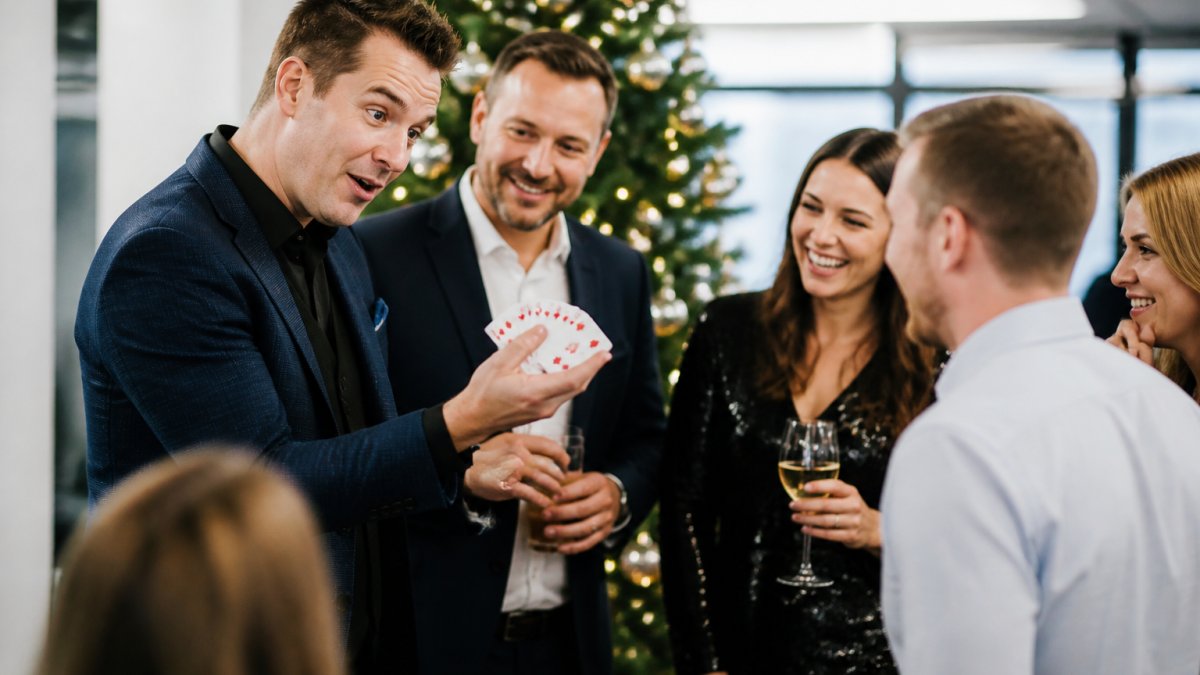
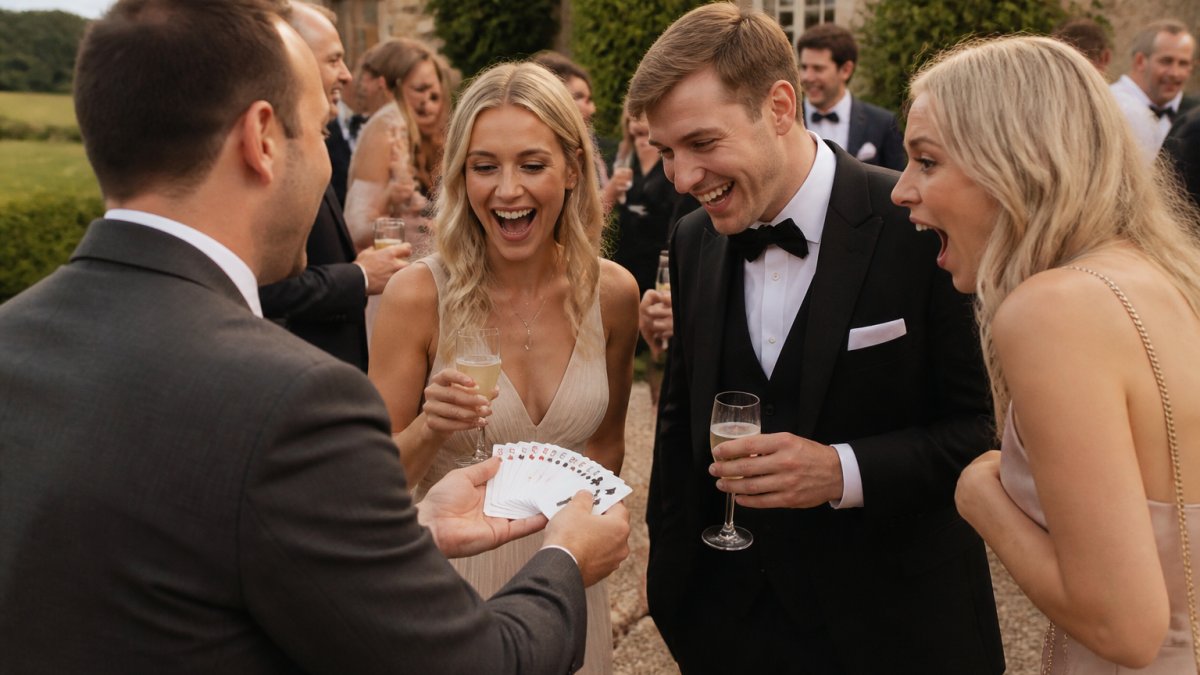
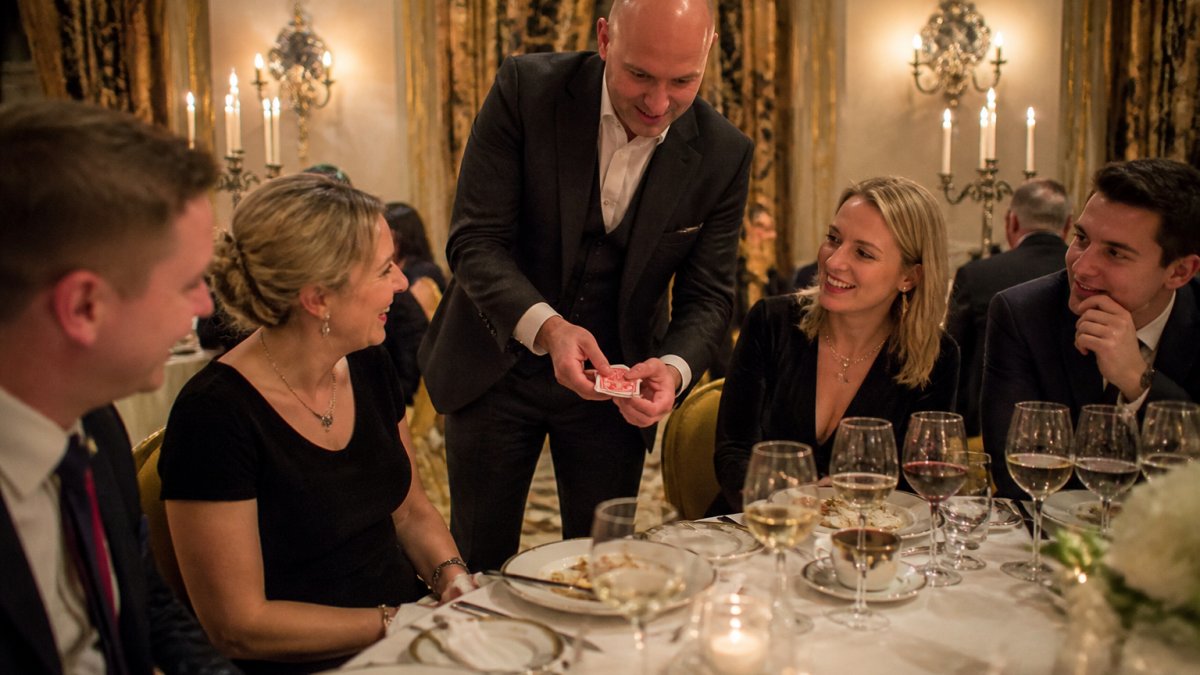
Close-up magic is perfect for the first hour as guests arrive and mingle. The magician moves table to table performing intimate tricks for small groups, giving each a personal performance that feels exclusive.
Close-up magic during reception typically runs 45 to 90 minutes.
Close-up magic is flexible. It needs no special setup, the magician performs with cards, coins, or borrowed objects, and acoustics don't matter because they speak directly to the people in front of them.
Confirm with your hotel that the magician has clear access to all reception areas, since some layouts have separate cocktail spaces that shouldn't require navigating through kitchens or blocked corridors.
Stage Magician Performance Length During Main Events
Stage performances work best during structured moments, after dinner, in the main entertainment slot, or as a corporate event centrepiece, with dedicated space, proper lighting, and a seated audience facing forward.
A typical stage act runs 20 to 60 minutes.
Stage magic requires more technical setup: a clear performance space, ideally a raised stage or defined area all guests can see, plus good lighting, since poor lighting ruins the visual impact.
Before booking, ask your hotel about the performance space: can they provide a stage or will the magician use the dance floor? Is lighting adequate or will you need uplighting?
Building an Event Schedule Template That Works
Creating a realistic timeline means knowing when to place your magic, how long it should run, and what happens before and after. A poorly timed act feels like an interruption; a well-placed one feels like a natural highlight.
Start by mapping your fixed moments: arrival, cocktail hour, dinner, speeches, first dance, and dancing. These anchors don't move, and your magician fits into the gaps and transitions between them.
Sample Timeline for Wedding Receptions
Here's how a typical wedding reception timeline incorporates magic:
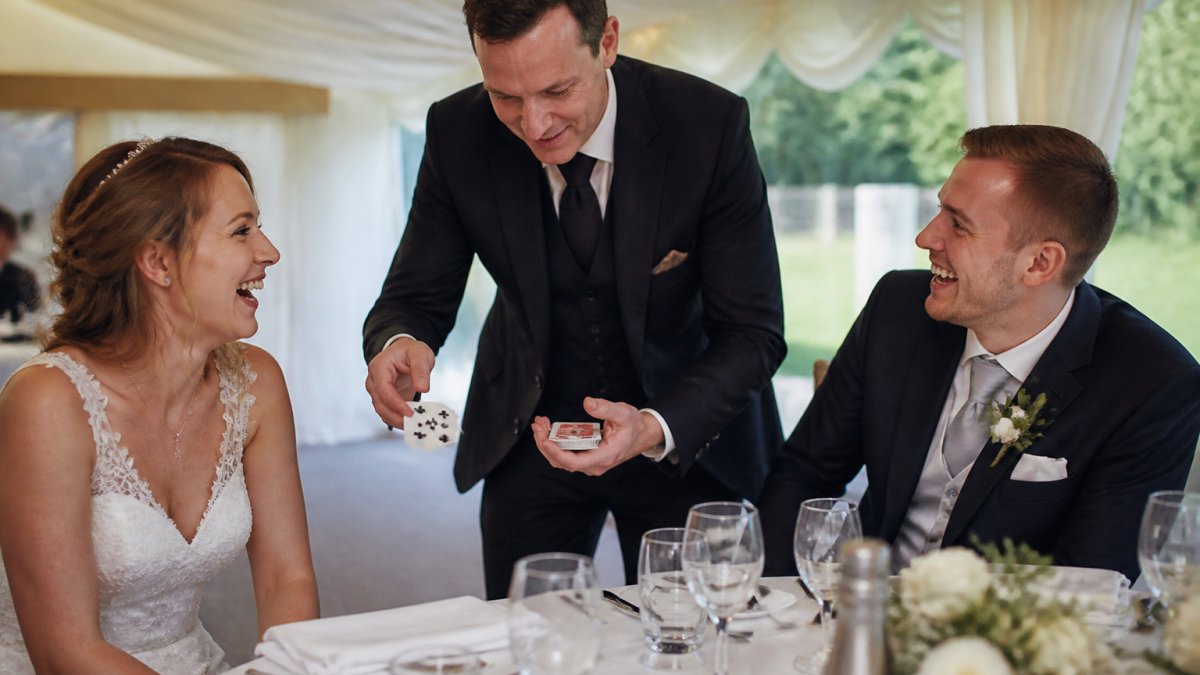
6:00 PM - Guests arrive Cocktail hour begins. Close-up magician is already positioned in the reception area, performing at tables as guests arrive and mingle.
7:00 PM - Dinner service begins Magician finishes close-up work and moves to a holding area. Guests are seated and eating.
8:00 PM - Speeches and toasts Magician steps back. This is family moment. After speeches conclude, energy dips slightly, perfect time to re-engage.
8:20 PM - Stage magic performance The magician takes the stage for a 30 to 40-minute performance. This becomes the main entertainment event.
9:00 PM - First dance and cake cutting Magician finishes. Couple takes the floor. This transition moment is important, don't overlap entertainment with couple moments.
This timeline works because magic fills the gaps where energy might dip. It doesn't compete with key moments like speeches or first dances.
Sample Timeline for Corporate and Birthday Events
Corporate events and milestone birthdays have different rhythms. Here's an example for a 40-person corporate Christmas party:
6:00 PM - Guests arrive, drinks and canapés Close-up magician works the room for 45 minutes, performing at small groups. This breaks the ice and gets people talking. Corporate audiences often appreciate the interactive element.
6:45 PM - Dinner service begins Magician finishes. Guests eat and network.
7:30 PM - Main entertainment slot Depending on the vibe, the magician can perform a 30-minute stage act, or continue with close-up magic if the space and mood suit it. For corporate events, stage magic often works better because it gives everyone a shared experience.
8:00 PM - Awards, announcements, or informal socialising Magician exits or performs additional close-up work depending on the event's priorities.
For a birthday with mixed ages, adjust timing based on when children are present: schedule the magician during their time if kids attend early, or during main socialising or dinner for adult celebrations.
Positioning Your Magician Between Courses and Key Moments
The best magicians don't just perform, they read the room and know when to step in and when to step back.
During dinner service, guests focus on eating and conversation, so a full stage performance feels jarring.
Don't schedule magic during speeches and toasts, but immediately after, when energy dips before dancing, magic becomes valuable again.
Key transitions, between cocktails and dinner, dinner and entertainment, entertainment and dancing, are where a skilled magician shines, performing something quick and surprising that lifts the mood.
This is where experience matters. A magician who's performed at dozens of hotel events knows these rhythms instinctively and places magic where it genuinely enhances the experience rather than forcing it into every moment.
Coordinating with Hotel Teams and Managing Room Setup
Your hotel's event manager is your partner in making magic work, controlling space, timing, setup, and logistics. A magician who communicates clearly with the hotel team delivers a far more seamless performance.
Working with Hotel Event Managers
Before you book, have a conversation with your hotel's event manager about magic. Explain what you're planning, what the magician needs, and how it fits into your timeline. A good event manager has hosted entertainment before and will have practical insights.
Share these specifics with the hotel:
- Magician arrival time: When does the performer need to arrive to set up? For close-up magic, 30 minutes early is usually enough. For stage magic, allow 60 to 90 minutes for setup and technical checks.
- Performance spaces: Where will close-up magic happen? Where will the stage performance take place? Does the hotel have a stage, or will the magician perform from the dance floor?
- Technical needs: Does the magician need audio equipment, lighting, or power? Can the hotel provide these, or will the magician bring their own?
- Guest flow: How will guests move between spaces? Will the magician need to navigate corridors, or can they access all areas directly?
- Timing integration: Share your timeline and ask the hotel to confirm that the proposed magic slots don't conflict with their service schedule.
A hotel that's hosted entertainment before will have solutions ready. They might suggest a better time slot, warn you about acoustics in certain rooms, or recommend adjustments that make the performance stronger. Listen to these suggestions, they come from experience.
Assessing Room Layout, Acoustics, and Sightlines
The physical space determines what magic works. A long, narrow room with pillars creates dead zones where guests can't see a stage performance. A high-ceilinged ballroom with clear sightlines works beautifully.
Visit the venue if possible. Stand in different spots and look at the proposed performance space. Can you see clearly from all tables? Are there pillars or obstacles blocking the view?
For close-up magic, acoustics matter less because the magician speaks directly to small groups. But for stage magic, a quiet room with good acoustics makes a huge difference.
Sightlines determine whether your investment in magic pays off. If half your guests can't see the performance, they'll be disappointed.
Planning for Schedule Changes and Contingencies
Real events rarely go exactly as planned. Guests arrive late. Dinner runs long. Speeches take longer than expected. Your magician needs flexibility to adapt.
Discuss contingency plans with your performer before the event. What happens if dinner runs 30 minutes over? Can the magician shift their start time?
A good magician has performed enough hotel events to handle these shifts.
Build flexibility into your schedule. Don't book the magician to finish at exactly 9:00 PM if dancing must start at 9:00 PM. Give a 15 to 20-minute buffer.
Also consider weather or unexpected delays. If your event includes an outdoor cocktail hour and weather forces you indoors, can the magician still perform? Most close-up magicians can adapt to almost any space.
Ensuring Your Magic Act Stays Fresh Across the Evening
If your event is long, a wedding reception that runs five or six hours, guests might see the same magician multiple times. The challenge is keeping the experience fresh so it doesn't feel repetitive.
A skilled magician has a deep repertoire and adapts their performance based on the audience. They might do card tricks with one group and coin magic with another.
This is another reason experience matters. A magician who's performed at dozens of events knows how to keep things interesting across multiple performances.
If you're concerned about repetition, discuss this with the magician when you book. Ask how they vary their performance. Do they have multiple acts they can draw from?
Booking the right magician for your hotel event comes down to matching their skills to your timeline and space. Paul Newman Magician brings 18 years of UK event experience and performs across the full spectrum of magic styles, from intimate close-up work during cocktails to impressive stage performances during main entertainment.
Frequently Asked Questions
When should a magician perform at a hotel event?
The timing depends on your event format and guest flow. For weddings, close-up magic works best during cocktail hours and between courses at dinner. Stage performances fit well after the main meal, before or after speeches, or as the evening's centrepiece entertainment. Corporate events often benefit from magicians during networking periods or as a surprise element between agenda items. Discuss your specific timeline and entertainment goals with your magician when booking to ensure they can adapt to your hotel's schedule.
How long should a magician perform at a hotel event?
Close-up magic typically works in 20 to 60-minute blocks, moving between tables or mingling with guests. Stage magic acts generally run 20 to 45 minutes as a standalone performance. For a full evening of entertainment across multiple time slots, your magician might perform for 1 to 4 hours total, split into shorter segments. The right duration depends on your guest count, event type, and whether the magic is the main entertainment or a supporting element. A professional magician can advise on what keeps audiences engaged without fatigue.
Can a magician adapt a performance if a hotel event runs late or off schedule?
Yes, experienced magicians build flexibility into their planning. If dinner runs long or speeches overrun, a magician can shorten or extend their act, skip planned segments, or adjust their positioning in the timeline. This is why sharing a detailed run-of-show and contingency plans with your magician well in advance is essential. Confirm their arrival time, setup needs, and backup timings when booking. Clear communication with your hotel coordinator and magician ensures everyone can adapt if the schedule shifts by 15 or 30 minutes.
Should a magician perform during a meal or between courses?
Performing between courses works best for most hotel dinners. Close-up magic at tables during the main course can distract guests from eating and create awkward sightlines. Between-course performances allow guests to finish eating, clear plates, and focus fully on the entertainment. Some magicians excel at brief, non-intrusive table magic during appetisers or cocktail hour. Discuss your meal service timing and table layout with your magician and hotel coordinator to find the optimal slots that maintain flow without disrupting service or guest comfort.